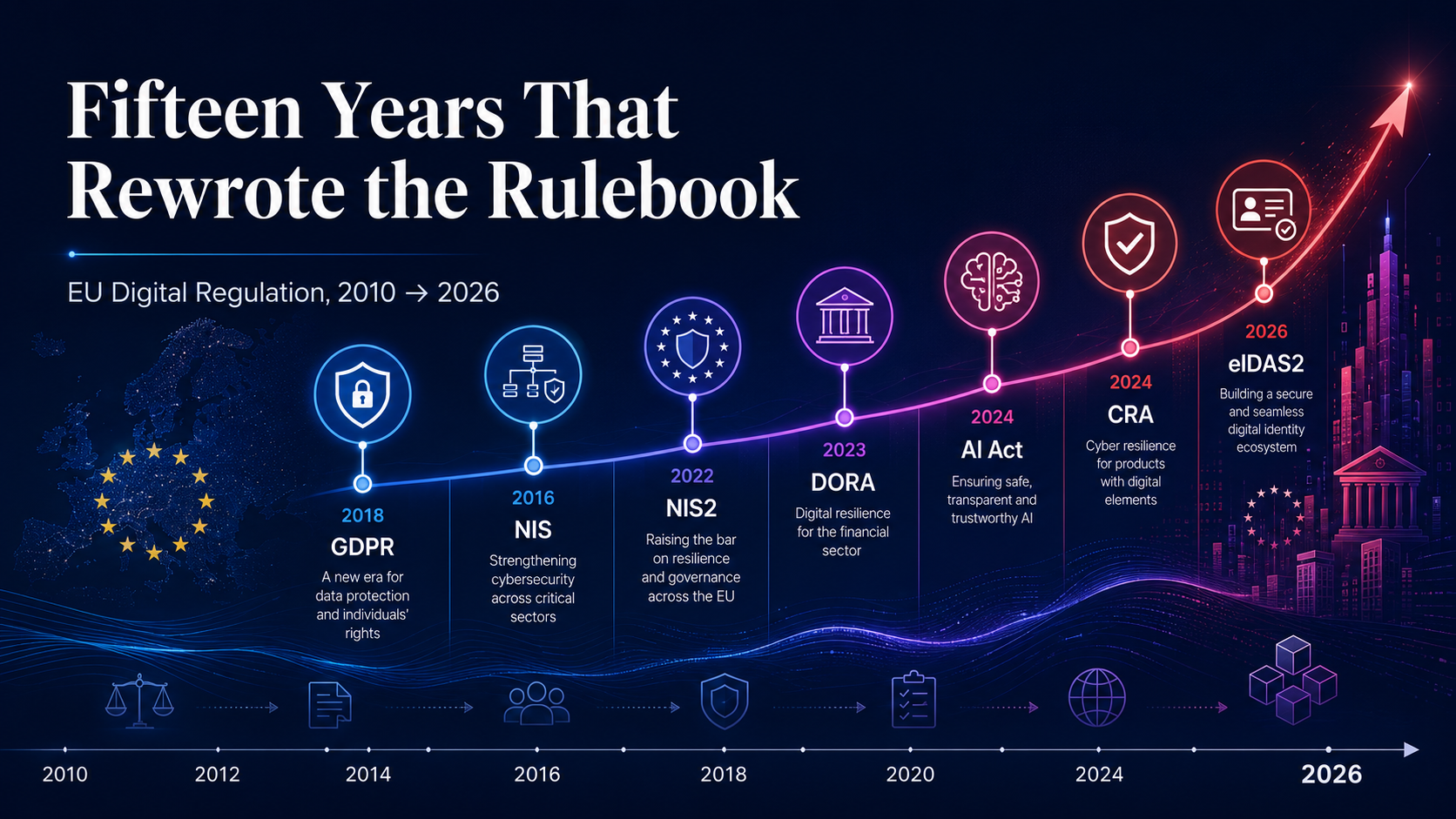
A Decade That Rewrote the Rulebook: EU Digital Regulation, 2016 → 2026
In 2016, an EU company's digital obligations fit in one directive. By 2026 they fill a shelf, and the shelf is still growing. Understanding the pattern matters more than memorizing the acronyms, because the pattern tells you something uncomfortable: compliance is never "done."

Part of the pillar series Europe's Digital Dependence, Explained.
This is practical guidance for compliance teams, not legal advice. Current as of July 2026.
If you feel like the rules keep multiplying, you're right, and there's a shape to it. EU digital regulation arrived in three waves, each triggered by a different anxiety, and each one added to rather than replaced the last.
Wave 1: Data protection (2016–2018)
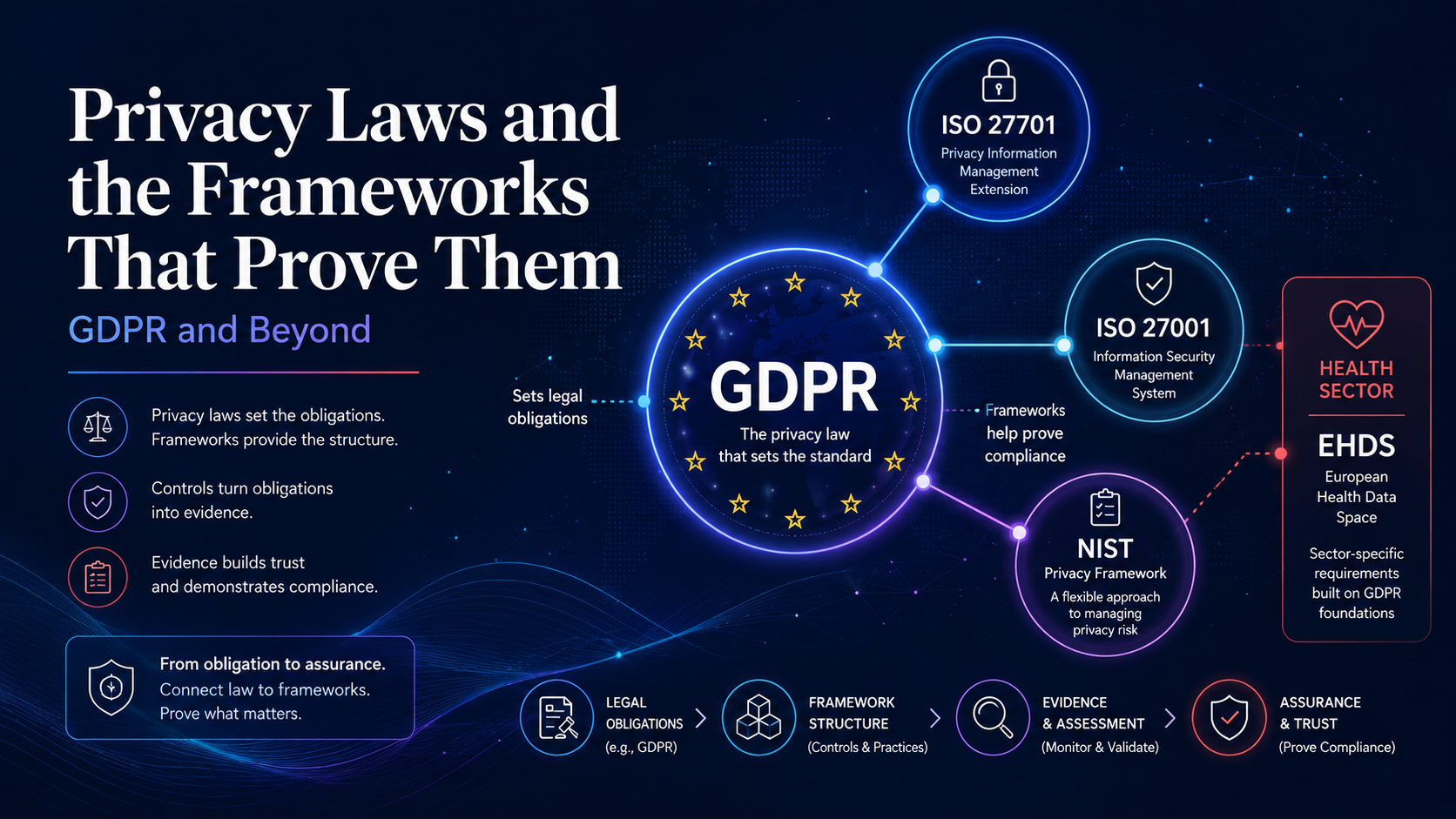
The modern era starts with GDPR (Regulation (EU) 2016/679): adopted in 2016, applicable from 25 May 2018, replacing the fragmented 1995 Data Protection Directive. The driver was simple: national privacy rules had diverged, and the digital economy had made personal data the core asset of business. GDPR harmonized the rules, gave individuals enforceable rights, and introduced the accountability principle: you must be able to demonstrate compliance, not just claim it. That single word, demonstrate, set the tone for everything that followed (EUR-Lex).
Wave 2: Cyber and platforms (2022–2024)
The second wave answered breaches, supply-chain attacks, platform power, and the financial sector's growing dependence on a handful of tech vendors. In a compressed span:
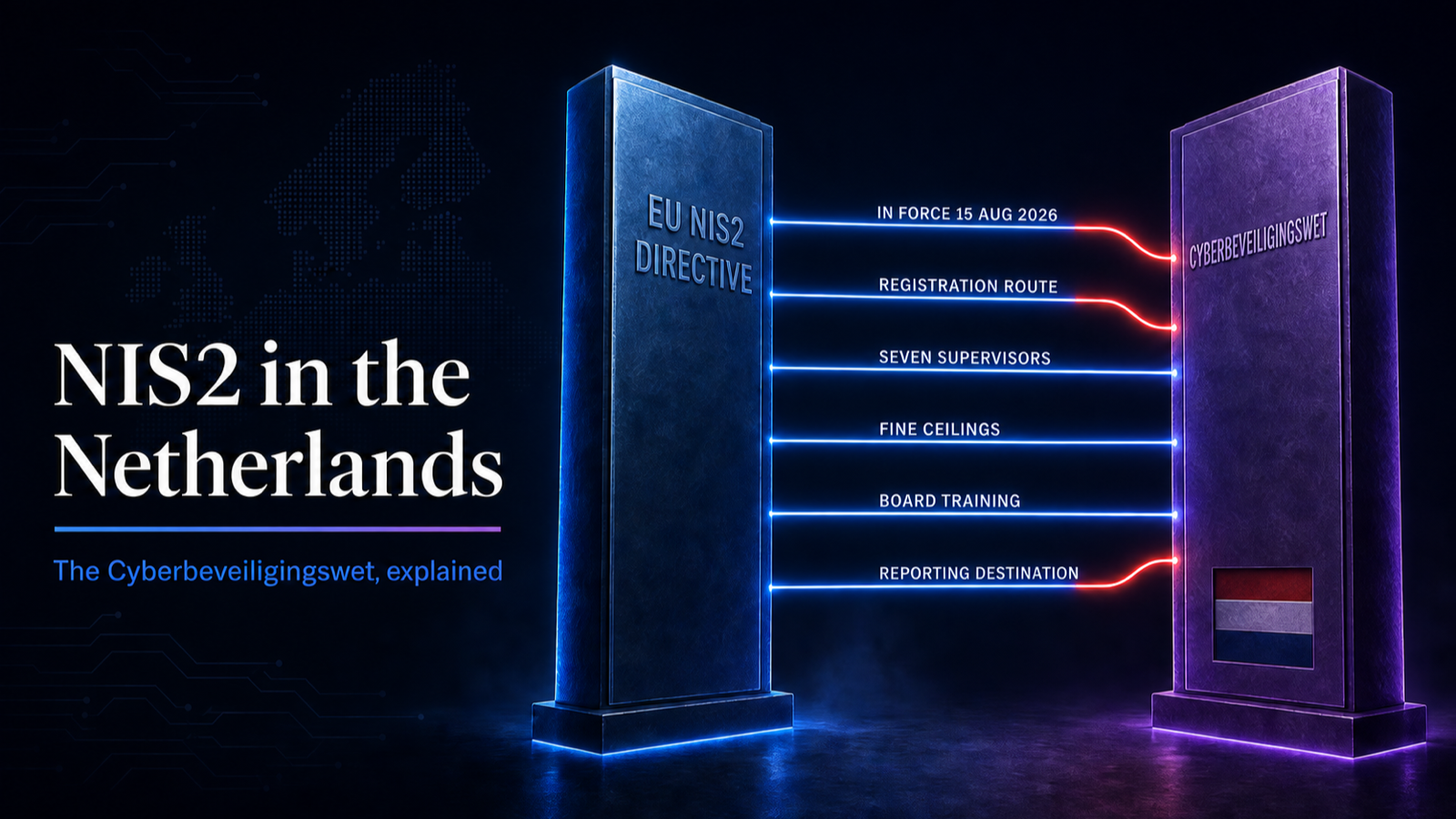
- NIS2 (2022/2555) widened EU cybersecurity obligations across 18 sectors and added management accountability.
- DORA (2022/2554) did the same for finance, with a tighter, five-pillar resilience regime.
- The DSA and DMA targeted platform power.
- The AI Act, the Cyber Resilience Act, and eIDAS2 followed in 2024, extending rule-making into AI, product security, and digital identity.
Wave 3: AI and sovereignty (2024–2026)
The third wave is still breaking: the AI Act phasing in, the CRA's obligations arriving in 2026–2027, the Data Act applying from 2025, the Cyber Solidarity Act, the European Health Data Space, and (in June 2026) a tech-sovereignty package (with the Cloud and AI Development Act proposed). The drivers now are AI and geopolitics.
The verified timeline
Here is the stack, dated and current as of July 2026, with one entry that proves the whole point.
| Year | Milestone |
|---|---|
| 2016 | GDPR adopted; NIS1 Directive adopted |
| 2018 | GDPR applies (25 May) |
| 2023 | NIS2 and DORA enter into force (16 Jan) |
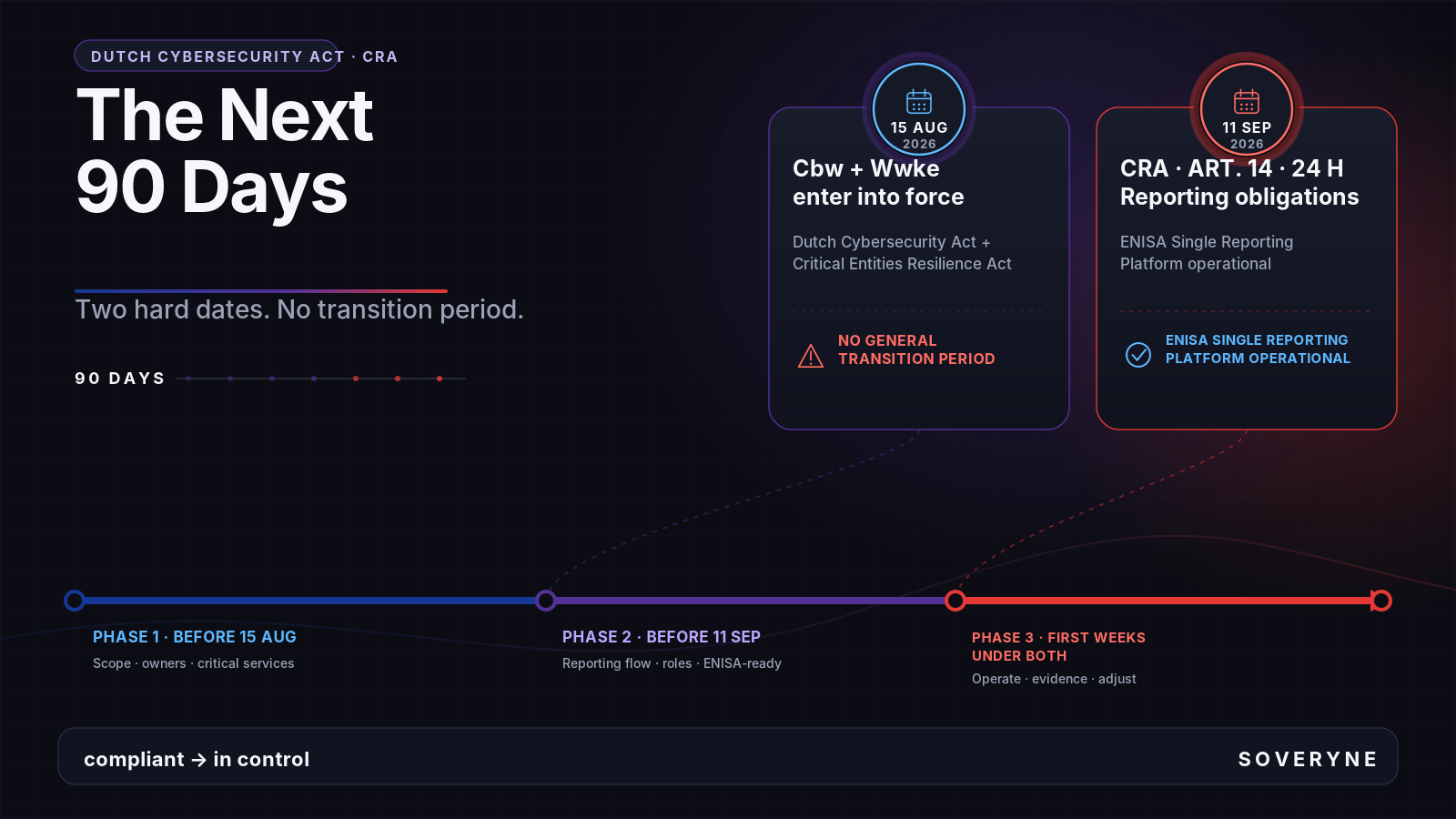
| 2024 | NIS2 transposition deadline (17 Oct); AI Act in force (1 Aug); CRA in force (10 Dec) |
| 2025 | DORA applies (17 Jan); Cyber Solidarity Act; Data Act applies (12 Sep); EHDS in force |
| 2026 | CRA reporting duties (11 Sep); tech-sovereignty package proposed; NIS2 enforcement reaches the EU Court |
| 2027 | Data Act switching/egress ban (12 Jan); CRA main obligations (11 Dec); AI Act high-risk (Annex III): 2 Dec |
| 2028 | AI Act product-embedded high-risk (Annex I): 2 Aug |
Source: EUR-Lex primary texts; European Commission.
The pattern that should change how you operate
Two things jump out of that table.
First, regulation compounds; it rarely repeals. GDPR didn't go away when NIS2 arrived. NIS2 didn't go away when DORA arrived. Obligations accumulate, and they overlap. A compliance posture built in 2018 and left alone is not "done"; it has silently decayed.
Second, and this is the live proof, the dates themselves move. The AI Act's high-risk obligations were originally set for August 2026 and 2027. In mid-2026, through the "Digital Omnibus," the EU formally pushed them back to December 2027 and August 2028 (Council of the EU, final adoption 29 June 2026). Any explainer written against the 2024 text is already wrong. Meanwhile, on 8 July 2026 the Commission referred four Member States to the Court of Justice for failing to transpose NIS2: the same law, moving in the opposite direction, toward harder enforcement.
This timeline is the acceleration argument that motivates the compliance-mapping approach. Static knowledge decays in both directions: obligations tighten and timelines shift. That is the operational problem this series keeps returning to.
Where Soveryne fits
A printed timeline is out of date the day it's published, as the AI Act just demonstrated. That's exactly the job of Counsel: a living answer instead of a static one. Ask "what's the current deadline for AI Act high-risk systems?" or "did NIS2 transposition complete in the Netherlands?" and Counsel answers from the frameworks and official sources in its knowledge base (with citations) rather than from a blog post that's six months stale. For a domain where the ground shifts under you, a grounded, current, cited answer is the difference between confidence and exposure.
And when a date does move, as it will again, Command is where that change lands operationally: reprioritize the controls tied to that deadline, and keep the evidence current instead of scrambling before an audit. The timeline moves; your program shouldn't have to lurch.
FAQ
Why has EU digital regulation accelerated so much? Three waves of drivers: harmonizing data protection (2016–18), responding to cyber and platform risk (2022–24), and governing AI and sovereignty (2024–26). Each wave added laws rather than replacing earlier ones.
Do newer laws replace older ones like GDPR? Almost never. NIS2 replaced NIS1, but GDPR, DORA, the AI Act and others coexist and overlap. Obligations compound over time.
Why do compliance deadlines keep changing? Implementation depends on supporting standards, tools, and national transposition. When those lag, the EU adjusts timelines (as it did for the AI Act's high-risk obligations in 2026), so any static reference can quickly become inaccurate.
How do I keep up with changing regulation without a full-time legal team? Use a grounded, cited assistant that answers from current frameworks (rather than stale summaries), and a control platform where a changed deadline simply reprioritizes existing work.
The rules keep moving; your answers should too. Get current, cited answers with Counsel, and keep controls aligned to shifting deadlines with Command.
Sources
- EUR-Lex, GDPR, NIS2, DORA, AI Act, CRA, Data Act primary texts: https://eur-lex.europa.eu/
- European Commission, NIS2 CJEU referral, 8 July 2026: https://ec.europa.eu/commission/presscorner/detail/en/ip_26_1499
- Council of the EU, final adoption of AI Act simplification (Digital Omnibus), 29 June 2026: https://www.consilium.europa.eu/en/press/press-releases/2026/06/29/artificial-intelligence-council-gives-final-green-light-to-simplify-and-streamline-rules/