Sovereign AI, Explained
This is our whitespace. Cloud dependence is a known story; AI is repeating it one layer up, faster and deeper. This cornerstone explains why "sovereign AI" is a real category and not a marketing label, and links to the article behind each claim.

Sovereign AI is AI you can run without surrendering jurisdiction over the data it sees: the model, the inference and the prompts stay inside a legal and geographic boundary you control, and the architecture stays portable enough that you can change provider without rebuilding. It is a property of the whole pipeline, not a label on a model.
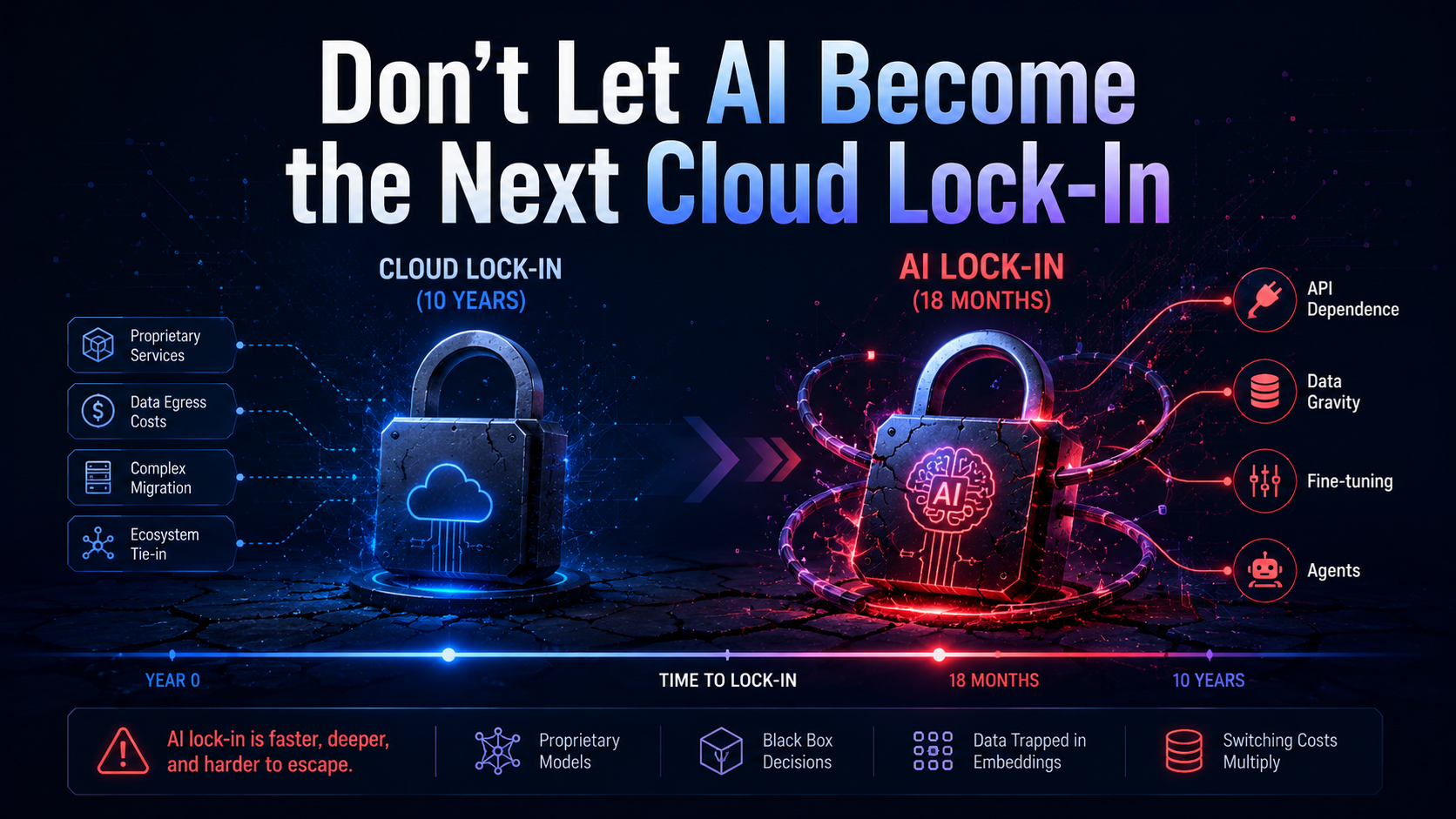
Every dependency starts as a convenience. The cloud did, until three companies held most of the market and leaving became unthinkable. AI is now running the same play, and the tell is the speed: cloud needed a decade to become load-bearing; AI is doing it in eighteen months. The difference is that this time the pattern is visible in advance, which means it is avoidable.
Three ideas make sovereign AI a concrete discipline rather than a slogan. Each has a full article behind it.
Don't let AI become the next lock-in
The shape of AI dependence rhymes with cloud, one layer up. The US builds the frontier models; Europe consumes them, and the market is already concentrated in a handful of providers. AI adds new, stickier lock-in mechanisms, too: API coupling, fine-tuning welded to one base model, and the data gravity of embeddings, where switching providers means re-embedding the entire corpus. The answer is portability by design, a model-abstraction layer, multi-model routing, and grounding over fine-tuning, so your architecture looks less like a stack and more like a portfolio. The full case is in Don't Let AI Become the Next Cloud Lock-In.
The prompt is the data
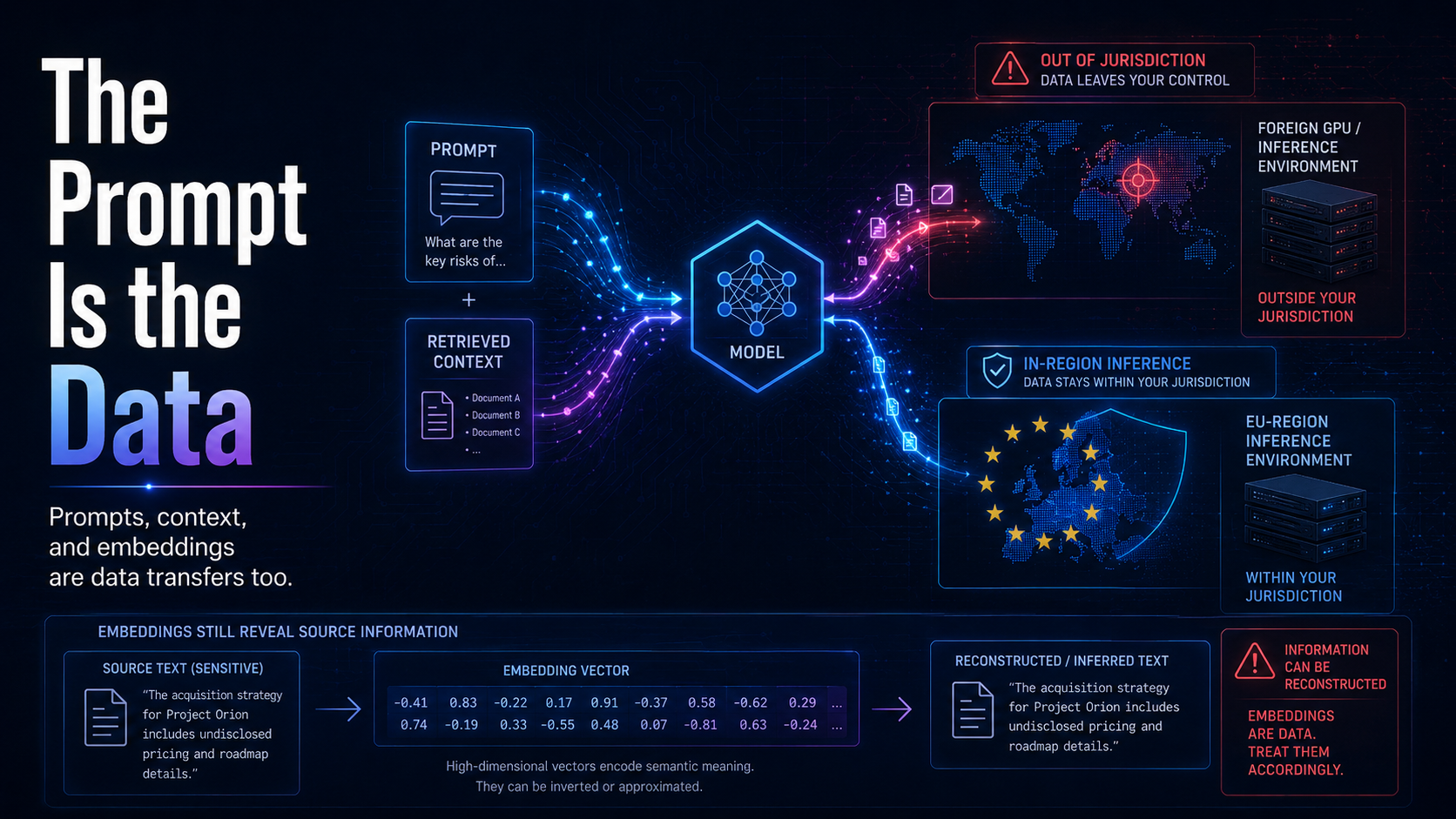
Here is the insight most sovereignty programs miss. Everyone accepts that customer data shouldn't sit in a foreign jurisdiction. Almost nobody applies the same rule to the prompts sent to an AI model, even though the prompt, and the context retrieved to answer it, often are the customer data.
| Object | Why it is a data transfer |
|---|---|
| The prompt | Carries the support ticket, patient note or contract clause into a foreign jurisdiction |
| The embedding | A lossy but invertible fingerprint of the source text, not "just numbers" |
| Retained inputs | Providers keep API inputs for a window, and retention means they can be compelled |
An AI feature that ships the most sensitive record in the system to a model running elsewhere puts a hole in the residency perimeter exactly the shape of an API call. Why inference has to happen on sovereign ground, and why embeddings leak the source, is in The Prompt Is the Data.
Secure AI the way attackers break it
Sovereign AI is not only about where the data goes; it is about whether the system survives contact with an attacker. Prompt injection is OWASP's number-one LLM risk, and it cannot be fully "solved", because a language model reads its trusted instructions and untrusted input through the same channel. The realistic goal is to build so a successful injection can achieve very little: defense in depth, least privilege, output filtering, and keeping the "lethal trifecta" of sensitive data, untrusted content, and external communication from ever lining up. The offensive-security view is in Securing AI the Way Attackers Break It.
Where this leads
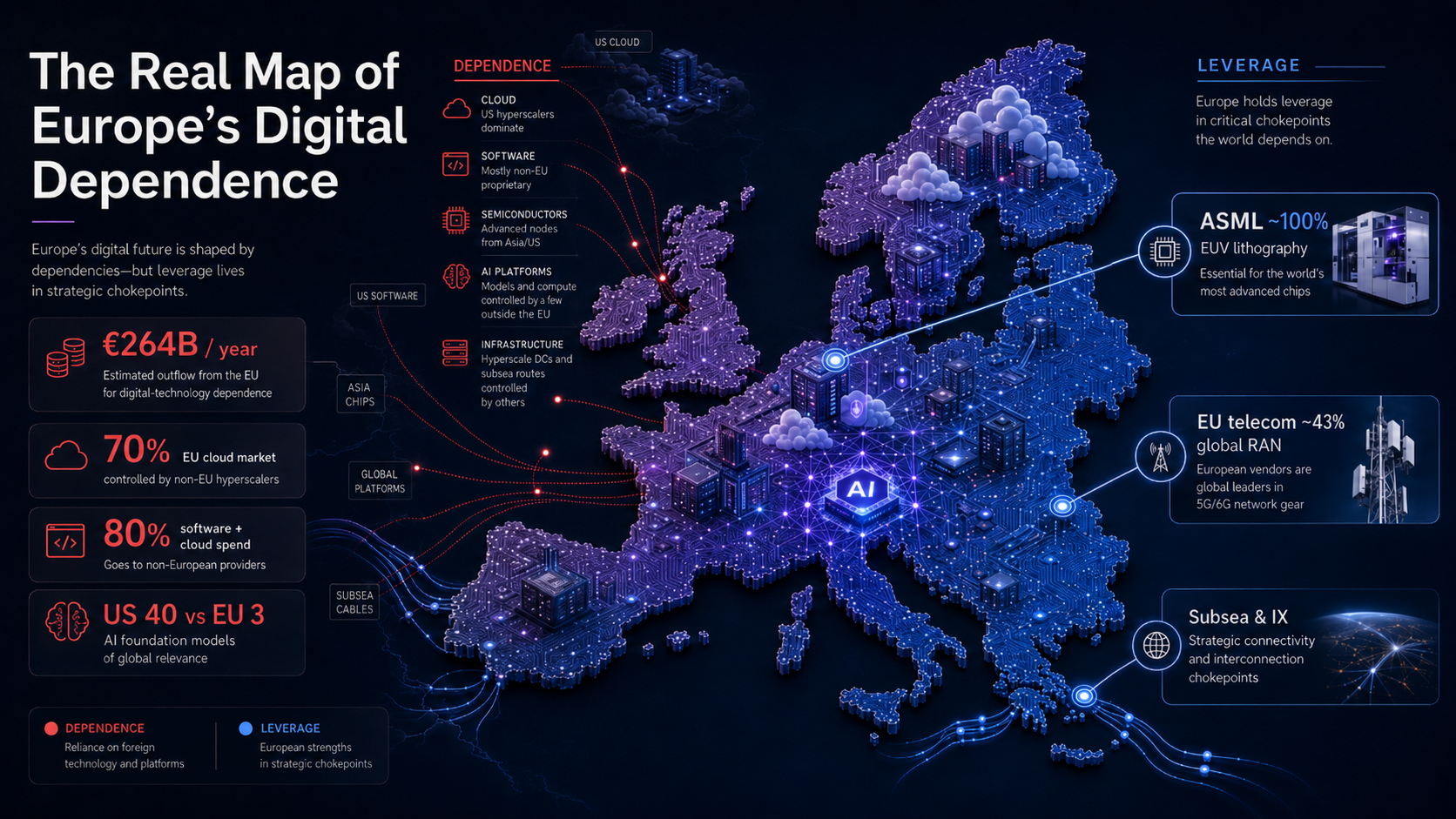
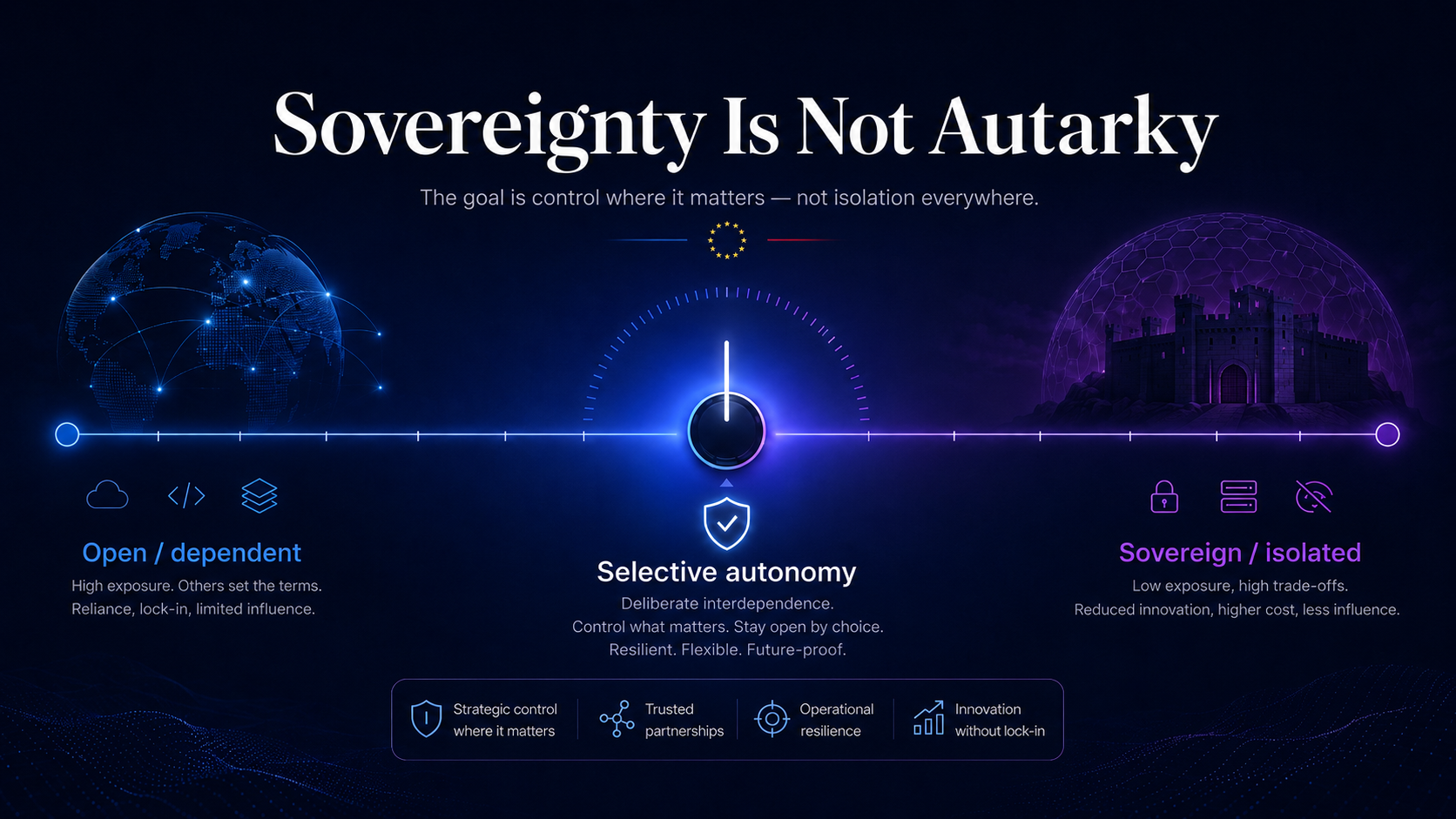
The stakes are the first pillar, Europe's Digital Dependence, Explained. The method, selective autonomy across the whole estate, is the second, Sovereignty You Can Actually Operate.
This is exactly why Counsel is built the way it is, grounded, cited, and running on EU-sovereign infrastructure so prompts and embeddings never cross the key boundary. To see it in practice, get in touch.